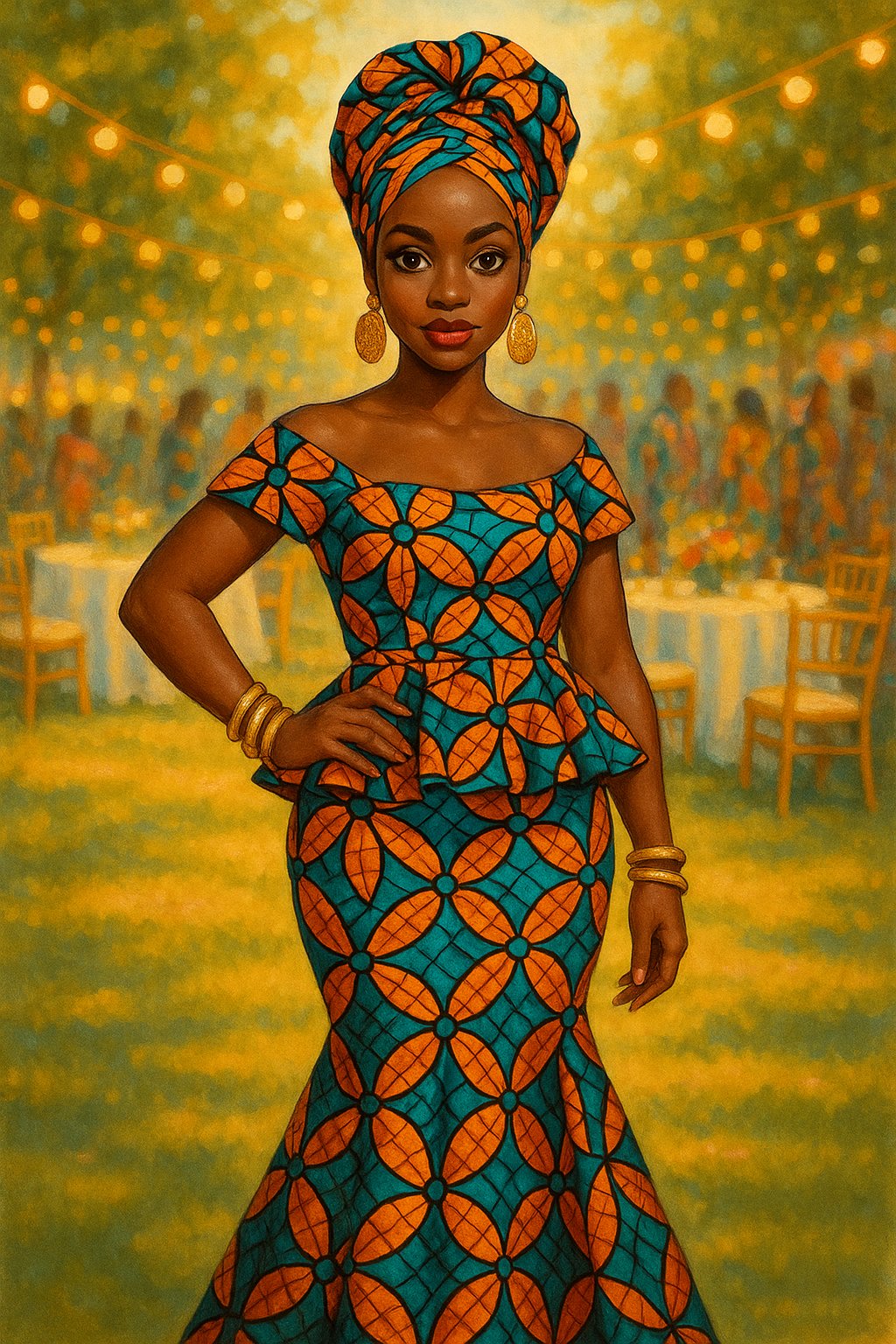
What ankara is
Ankara is the vivid wax print that shows up everywhere Nigerian style does — bold repeating motifs in saturated colour, cut into everything from casual two-pieces to full aso-ebi sets. It is the most versatile of the celebration fabrics: dramatic enough for a party, easy enough for a Saturday.
Where aso-oke reads ceremonial and adire reads artistic, ankara reads energetic — the print does the talking, so the styling job is mostly restraint.
Ways to wear it
- The two-piece. A fitted peplum or crop top with a flared skirt or trousers in one bold print — the easiest, most photographed ankara silhouette.
- The gown. A fitted or wrap midi in a single print, finished with simple heels and one piece of jewellery.
- Mix, but carefully. Ankara-on-ankara works when the prints share a colour family; a clashing second print is a confident look, not a safe one.
- The headwrap. A matching or solid-colour headwrap lifts even a simple ankara dress into occasionwear.
Occasions it carries
Day parties, birthdays, casual owambe, church, family visits — ankara is welcome almost everywhere. For the most formal owambe, lace and aso-oke usually outrank it; for everything else, a good ankara print is the reliable choice.
Ankara questions
What is the difference between ankara and aso-oke?
Ankara is printed cotton — bold repeating motifs. Aso-oke is a handwoven, structured cloth used for ceremonial wear (gele, iro and buba, agbada). Ankara is everyday-versatile; aso-oke is the formal fabric.
Can you mix two ankara prints?
Yes — the safe version keeps both prints in one colour family. A deliberate clash is a statement look; just make it look chosen, not accidental.
Is ankara appropriate for a wedding?
For a guest, usually yes — especially as an aso-ebi pick if the host chose ankara. For very formal ceremonies, lace or aso-oke reads more traditional.