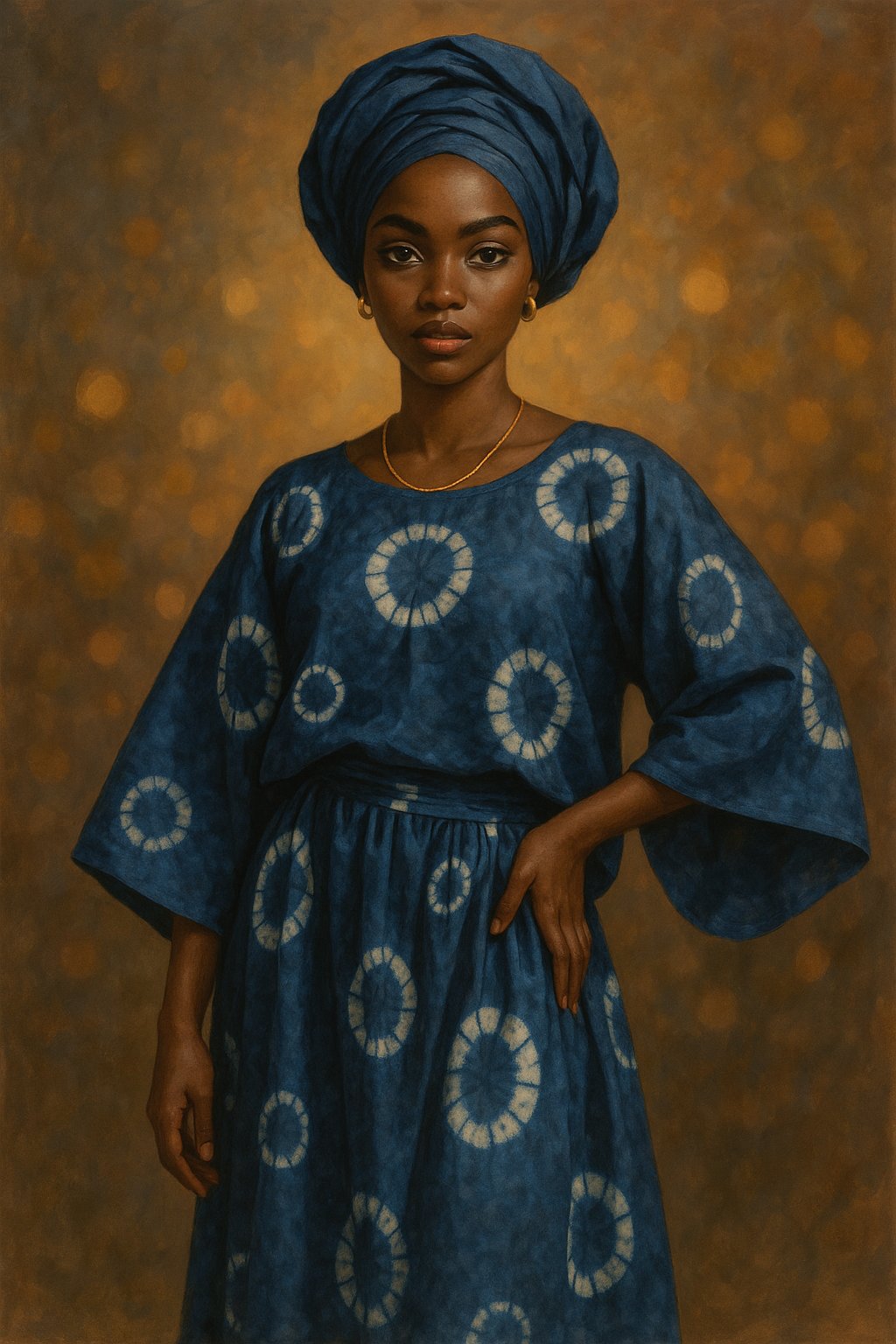
What adire is
Adire is Yoruba indigo resist-dye — cloth patterned by resisting the dye with stitched, tied or painted designs, so the deep indigo breaks into white circles, lines and motifs. No two pieces dye exactly alike; that handmade irregularity is the beauty.
It is the artistic cloth of the family — quieter than ankara, softer than aso-oke, and quietly luxe in the right cut.
How it's worn
- The two-piece. A matching adire shirt and wrapper or trousers — the classic set, artistic but pulled together.
- As an accent. An adire bag, headwrap or jacket over a plain outfit — the print does all the work.
- Full adire, styled up. A flowing gown or two-piece in a bold pattern, finished simply — the dye is the detail.
Where it fits
Day events, creative spaces, art-forward gatherings, relaxed owambe — adire sits between everyday and occasion. It is a confident, cultural choice rather than a formal one; for the most ceremonial briefs, aso-oke still outranks it.
Adire questions
What is the difference between adire and ankara?
Adire is hand resist-dyed — indigo cloth patterned with tied or painted resist, so every piece varies. Ankara is mechanically printed wax cloth with bold repeating motifs. Adire reads artistic; ankara reads bold.
What does eleko mean?
Eleko is the hand-painted resist technique — motifs drawn in cassava paste before dyeing, giving the classic indigo-and-white patterns.
Is adire only indigo?
Traditionally yes, indigo and white — though modern adire appears in other dye colours too.